
By Batsirai Sango.
The ceremonial home of football in the capital Harare, Rufaro stadium which has over the decades played host to some of the most epic football matches in the local game, most notably the biggest derby in the land “the battle of Zimbabwe” pitting giants Highlanders and Dynamos, saw its football services being halted in 2017.
History will also tell you that on April 17th 43 years ago Robert Nesta Marley known to the world as Bob Marley and his band the Wailers were the star attraction on the historic night of the newly independent republic of Zimbabwe independence concert, at the very stadium.
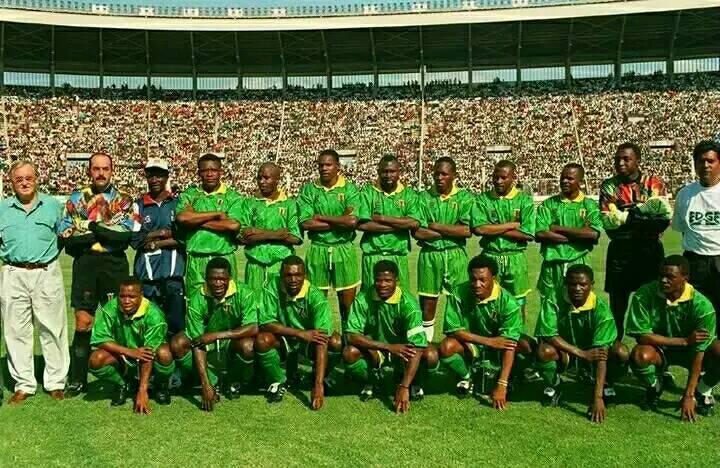
The stadium does hold an important place in the overall history of the land between the mighty Zambezi and Limpopo rivers, hosting the first national assignment following readmittance back into the community of football nations FIFA, of the beloved warriors in the first episode of the battle of the Zambezi involving Chipolopolo of Zambia and the warriors of Zimbabwe.
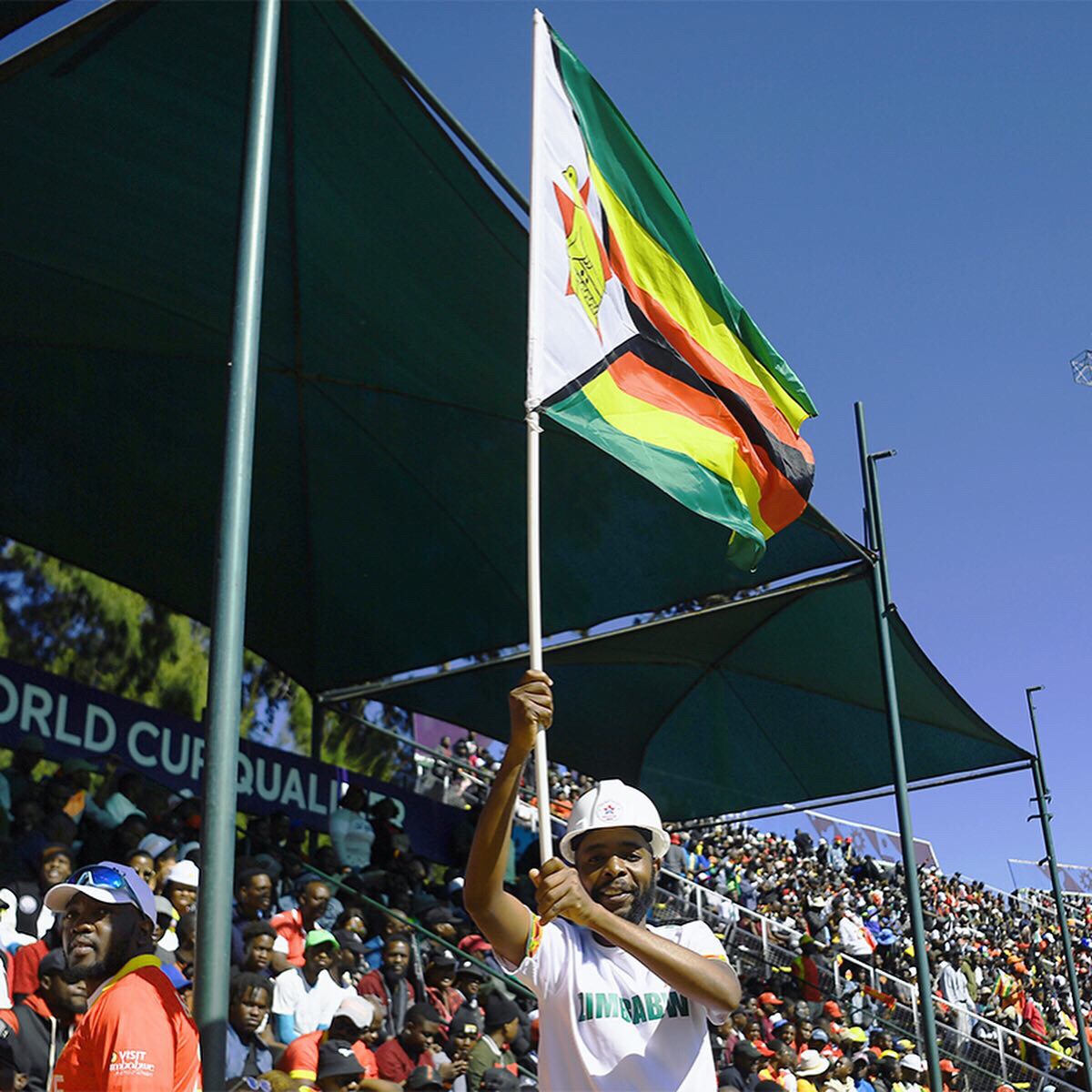
Not only has it played host to some of the most epic football battles like the one mentioned above, but also hosted matches where national allegiance has mattered the most in recent memory. Who can forget the match involving the nation’s number one team the warriors Zimbabwe playing against Mali in a 2012 African cup of nation’s qualifier, with former skipper Knowledge Musona holding his nerves as the entire nation held its breadth to score the winner in a last-minute penalty.
With all the aforementioned indelible moments the stadium has had to play host to one hoped there would have been a collective effort from all the relevant and responsible authorities to ensure that the stadium reflects and represents the history and gigantic events it has had to host over the years.
The state of affairs at the stadia was in freefall mode and in the interest of infrastructure itself and the sport of football action had to be taken and every football fanatic had hoped the closure would have given time and space to the authorities to give a worldclass face lift to one of the country’s oldest football stadia.
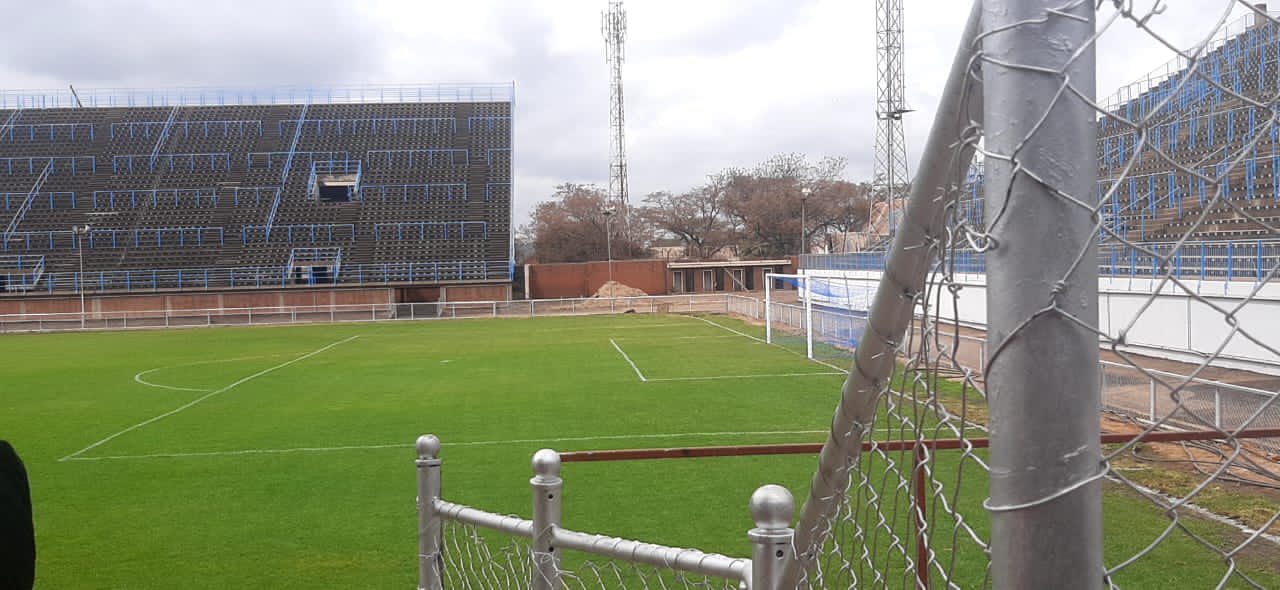
The ceremonial home of football situated in the high-density suburb of Mbare was closed more than half a decade years ago for supposed renovations but the major thing the City Council authorities did was only to remove a synthetic turf, which they replaced with natural grass, after complaints from clubs that the artificial turf that was donated by FIFA had become unplayable and contributing to injuries due to lack of maintenance.
The artificial surface was first erected in 2008 and almost a decade later discarded for so-called face lift which has most recently turned out to be nothing more than mediocrity at its best from the Harare authorities. Mediocrity in the sense this is 2023 and renovations of any kind ought to be in tandem with modern trends, but if there is no new infrastructure or an overhaul to it, then one asks what purpose the so-called face lift was intending in the first place. You go to England; you have the New Wembley stadium a reflection of the complete and overhaul change from the old Wembley.
And to imagine it had to take the world football governing body to donate the synthetic turf to give a presentable look to the already dilapidating football infrastructure leaves a lot of questions as to the importance we give as a nation to football infrastructure, going back to the previous article on the deplorable state of football infrastructure.
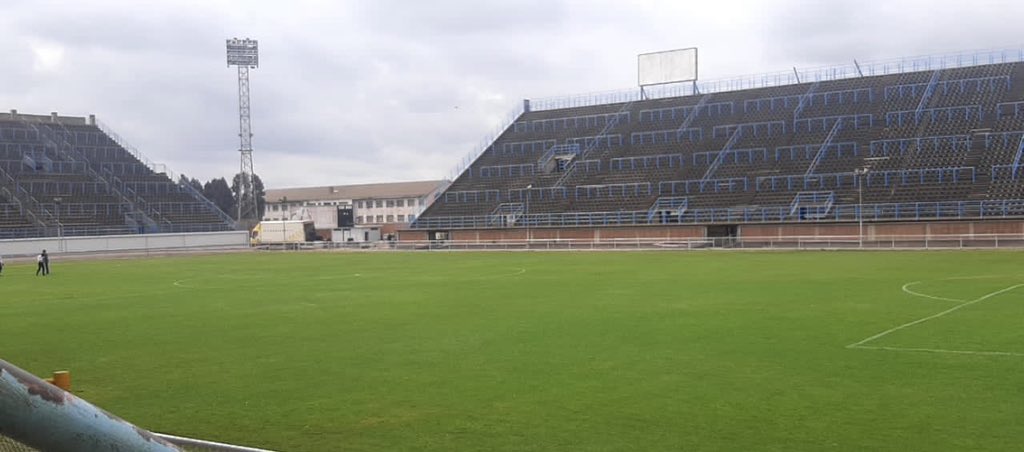
Now a couple of days back the Harare city authorities announced that the face lift to Rufaro stadium was complete, however a look at the so-called complete civil works leaves one wondering what it is really that they were doing. For all the so-called face lift, there is nothing to that effect and for all the allegations of local authorities being riddled with corruption, graft could this have been one of the money spending and laundering schemes.
The pitch conditions are still a far-cry and considering how primary the face lift ought to have been to that, leaves one wondering how the authorities in the country’s capital are doing in their so-called discharge of local governance. With the most followed foreign football league being the English Premiership, you wonder how it is that these imbecile of city fathers fail to copy such good examples of ticking football infrastructure masterpieces.
As if that is not enough the city of Harare has twinning relationships with some of the elite cities across the globe, namely with the city of Munich in Germany and the city Nottingham in the United Kingdom. The two European cities have rich football culture and history with the city of Munich in Germany being home to Bavarian and former European giants Bayern Munich whilst Nottingham being host to 1979 European cup champions Nottingham Forest.
Why would and was the face lift of Rufaro stadium by the city fathers not twinned with world class infrastructure at the Allianz Arena stadium in Munich? Food for thought.
The entire terrace area still has concrete seats except for a small section of the stadia that has bucket seats that have proved convenient across the many elite football infrastructure across the football community the world over. Rufaro stadium at full capacity accommodates 60 thousand plus football fans and is it much of an investment to ensure the whole terrace area has bucket seats at Rufaro.
On that one we can admonish the local authorities but what of ZIFA the local football motherboard, that have the sacred duty of running football and ensuring all football infrastructure adheres to the norms and standards of the modern game. The Taylor report after the April 1989 Hillsborough disaster recommended that all football venues have bucket seats as a security measure in the event of such unforeseen tragedies.
Yes, it happened in England, but the football world is one big community and true to that narrative 13 years later Zimbabwe witnessed its worst football tragedy in a stampede at the national sports stadium in a match involving Zimbabwe and neighbors South Africa. Without any bucket seats at the time even up to this very day the overcrowding on that sad day led to innocent people losing their lives, hence drastic deliberate commitments ought to have been taking to ensure all football venues have basic security proof in buckets seats to avoid overcrowding that have tragic consequences.

The responsibility lies with ZIFA the owners of the game and the installation of the later come match-day enables to account gate takings against the number of fans that would have attended whatever match as well.
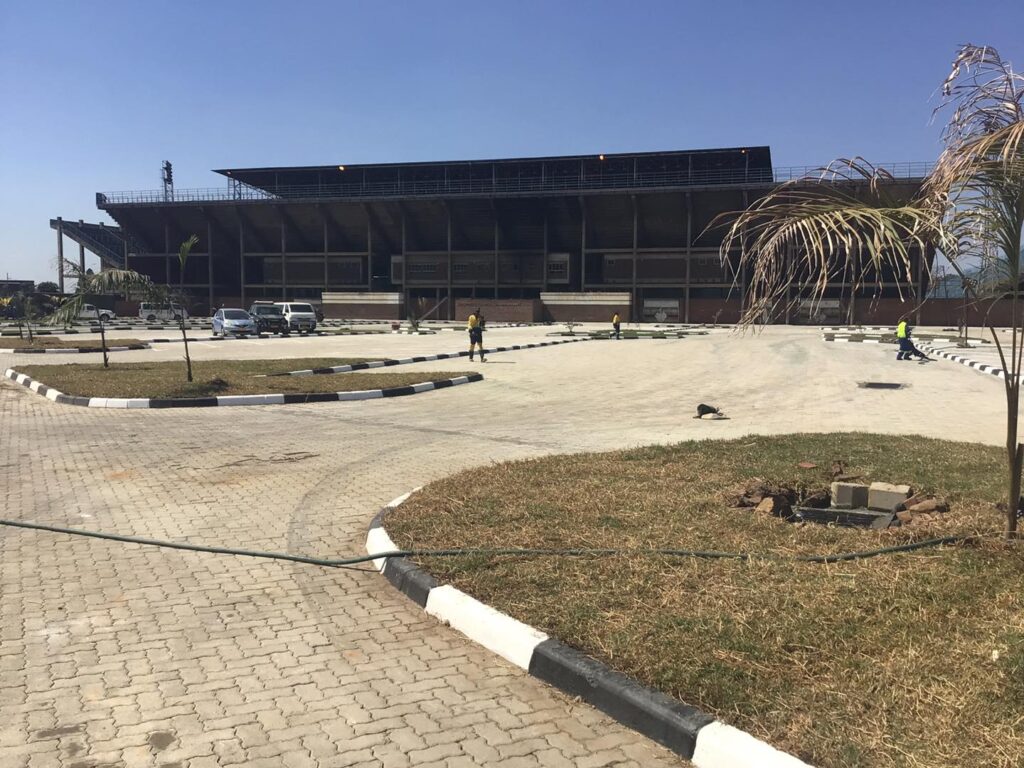
For the so-called face lift the only thing there is to show for it is the new car park, for all the face lift the stadium was purported to be going through for more than half a decade years. The city of Harare and the department responsible ought to be ashamed of themselves and hold to account for the supposed investment that went into the exercise because it’s clear that funds could have potentially been abused.
Yes, considering the sham, eyesore Rufaro stadium had become with no commitment of resuscitation from the authorities going on as if everything was normal, the exercise has to be commended for the sanity and presentability they have given to the venue.
In the short term what the Harare city authorities achieved was to bring about order and sanity, but in the long term they ought to be real renovations, with the City of Harare using its by-law muscle to bring about proper investment in that regard.
I previously mentioned the twinning relationships between the city of Harare and Munich in Germany that is host to the Allianz Arena stadium, and around the stadium there are essential services ready to attend to the needs and wants of football fans on match day be it in the German Bundesliga or its European champions league night. In the long term one hopes the twinning relationship will also result in the city fathers invoking deliberate investments of such services as food services which will be brisk business considering the huge amount of people all in one place.
Health care services would also be a critical investment as tragedies cannot be foreseen but it would rather be effective to be prepared and have response mechanisms in place, not just for the fans themselves but players as well. And health services in the immediate vicinity is one key response mechanism such that tragedies can be mitigated.
One can recall the tragedy that rocked world football during the confederations cup match between Cameroon and Columbia on June 26, 2003, when Indomitable Lions midfielder the late Marc Vivian Foe suddenly collapsed and later died, and from that tragic, sad experience it will be such an important investment in the event of an emergency whilst one waits for proper medical attention.
In the short term the city authorities have to be applauded for reigning in on the free fall dilapidation of the state of infrastructure at Rufaro stadium, but in the long term more needs to be done to alleviate the situation.